Chromatography
Detecting the nitrosamines you’re not looking for
Jun 10 2025
When NDMA contamination was first discovered in valsartan in 2018, it triggered global recalls, regulatory pressure, and a hard reset on how nitrosamines are assessed in pharmaceutical manufacturing. But as the industry adapted by targeting known nitrosamines, a bigger problem surfaced - nitrosamines were showing up that no one was looking for.
What if your product contains a nitrosamine not on your test list?
Nitrosamines can form anywhere - not just where you expect
Nitrosamines form when secondary amines react with nitrosating agents, often under acidic or heated conditions. And these precursors aren’t limited to active pharmaceutical ingredients. They can be found in excipients, solvents, raw materials - even inks and packaging.
Recent cases have shown nitrosamine contamination in:
• Pharmaceuticals: ranitidine, metformin, irbesartan, losartan
• Personal care: mascara, baby shampoo, tanning lotions
• Foods & beverages: cured meats, processed fish, beer
• Water and air: via chloramine disinfection and combustion by-products
The potential for unexpected formation means relying solely on targeted testing - however advanced - leaves gaps.
What is ATNC and why it matters
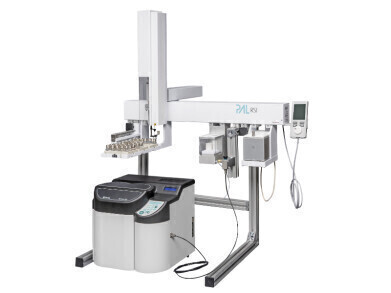
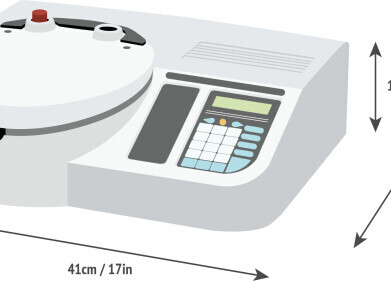
To address this, Ellutia developed the Automated Total Nitrosamine Analyser (ATNA), designed specifically to detect Apparent Total Nitrosamine Content (ATNC).
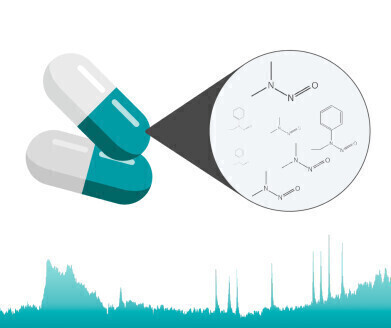
ATNC testing works differently. Instead of looking for individual nitrosamines, it detects the N=O functional group common to all of them. This provides a molar response for nitrosamine presence, regardless of structure.
• Non-targeted analysis: detects nitrosamines without needing specific standards
• Sensitivity: quantifies as low as 1 ppb (based on NDMA equivalency)
• Throughput: 6 samples per hour, 20 hours unattended, 120 vials per batch
• Reproducibility: robust calibration curves even in the presence of nitrites
It’s ideal for screening raw materials, APIs, excipients, packaging, and finished products - quickly identifying which samples require follow-up speciated analysis.
Real-world use case: removing interference from nitrites
One of the challenges in nitrosamine testing is interference from nitrites - a common ingredient that also liberates NO. Ellutia has optimised the vial chemistry in the ATNA system to remove up to 10 ppm sodium nitrite while still detecting NDMA at 10 ppb levels.
This allows confident screening without false positives, even in complex matrices.
What if ATNC is high?
A high ATNC result is a red flag. At this stage, a speciated analysis is needed to identify and quantify the specific nitrosamines. Techniques include:
• GC-TEA: direct molar response to NO, can detect unknowns
• LC-MS/MS and GC-MS/MS: useful for known nitrosamines with standards
Ellutia’s GC-TEA system offers particular advantages in confirming contamination when unknown nitrosamines are involved - detecting what others can’t.
See It All in Action - On Demand
We’ve taken all this insight and packed it into a technical walkthrough. Watch our on-demand webinar to see how the ATNA works, explore calibration data, and learn how it fits into a modern risk-based testing strategy.
Watch the full presentation here.
More information online

Digital Edition
Lab Asia Dec 2025
December 2025
Chromatography Articles- Cutting-edge sample preparation tools help laboratories to stay ahead of the curveMass Spectrometry & Spectroscopy Articles- Unlocking the complexity of metabolomics: Pushi...
View all digital editions










Events
Jan 21 2026 Tokyo, Japan
Jan 28 2026 Tokyo, Japan
Jan 29 2026 New Delhi, India
Feb 07 2026 Boston, MA, USA
Asia Pharma Expo/Asia Lab Expo
Feb 12 2026 Dhaka, Bangladesh




