-
-
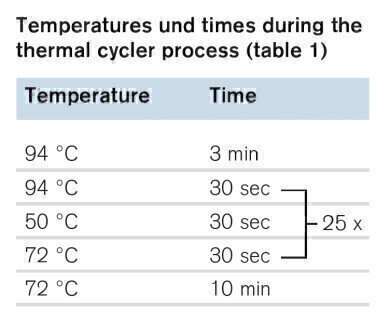 Table 1. Temperatures und times during the thermal cycler process.
 -
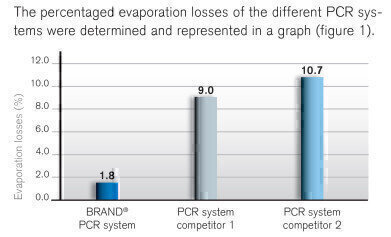 Figure 1. The percentaged evaporation losses of the different PCR systems.
Laboratory products
BRAND® PCR plates and PCR sealing films - a perfectly adjusted system
Oct 10 2018
Introduction
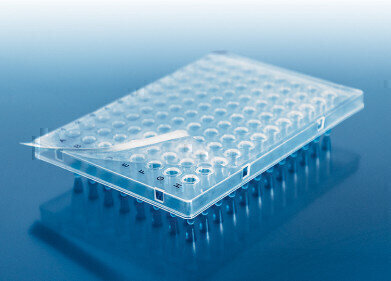
BRAND® PCR plates are designed to support polymerase chain reactions in several ways. The source materials selected are free of PCR inhibitors and the smooth vessel interior minimises the binding of enzymes and nucleic acid to the walls. In addition, the ultra thin-walled PCR plate design facilitates constant, rapid and precise heat transfer leading to convincing yields and short PCR cycle times.
Generating the desired PCR product and shielding it from evaporation are decisive elements of a successful PCR. The innovative self-adhesive press-to-seal sealing film wins over with easy handling; it is not tacky to the touch and provides superior evaporation protection. The film is highly transparent and can be used for measuring the smallest signals during optical measurements like Real-Time PCR.
BRAND® PCR plates and the BRAND® PCR sealing films form an masterfully tuned system. The surfaces of the PCR plates and the adhesive side of the sealing films are tailored to each other and reach striking results.
Material & Methods
Devices
Thermal cycler Biometra T1 Precision scale Sartorius CP 225 D
Transferpette® S (Cat. No. 7047 78)
Pipette tips 200 µl (Cat. No. 7320 08)
TipBox (Cat. No. 7322 08)
Roller (Cat. No. 7013 80)
Reagent reservoir (Cat. No. 7034 59)
PCR systems
BRAND® PCR system:
PCR plate Cat. No. 7813 68
with sealing film Cat. No. 7813 91
Competitor 1 PCR system:
PCR plate with matching sealing film Competitor 2 PCR system:
PCR plate with matching sealing film
Chemical reagents
Water (10 ml [50 µl each well])
Cationic dye methylene blue
Measurement of evaporation losses of different PCR systems
A mixture of water with the cationic dye methylene blue was prepared. In each PCR plate every well was filled with 50 μl of the water dye mixture and sealed with adhesive sealing film. The weighed portion of the plates and the sealing films was determined before and after the filling of the wells. The roller was used to ensure a firm seal. The PCR plates were then put into the thermal cycler Biometra T1 and a PCR run was performed (Table 1).
Finally the weighting portion of the PCR plates was examined again.
Analysis and Results
The percentaged evaporation losses of the different PCR systems were determined and represented in a graph (Figure 1).
Conclusion
To obtain successful PCR results it is important to use a harmonising PCR system. The PCR plates have to be securely sealed to preserve the generated PCR products. The adhesive surface of the highly transparent self-adhesive sealing film of BRAND® goes hand in hand with the surface of the BRAND® PCR plates. The encapsulated, pressure sensitive adhesive keeps the film easy to handle and non-tacky to the touch.
For more application notes please click here.

Digital Edition
Lab Asia Dec 2025
December 2025
Chromatography Articles- Cutting-edge sample preparation tools help laboratories to stay ahead of the curveMass Spectrometry & Spectroscopy Articles- Unlocking the complexity of metabolomics: Pushi...
View all digital editions










Events
Jan 21 2026 Tokyo, Japan
Jan 28 2026 Tokyo, Japan
Jan 29 2026 New Delhi, India
Feb 07 2026 Boston, MA, USA
Asia Pharma Expo/Asia Lab Expo
Feb 12 2026 Dhaka, Bangladesh




